
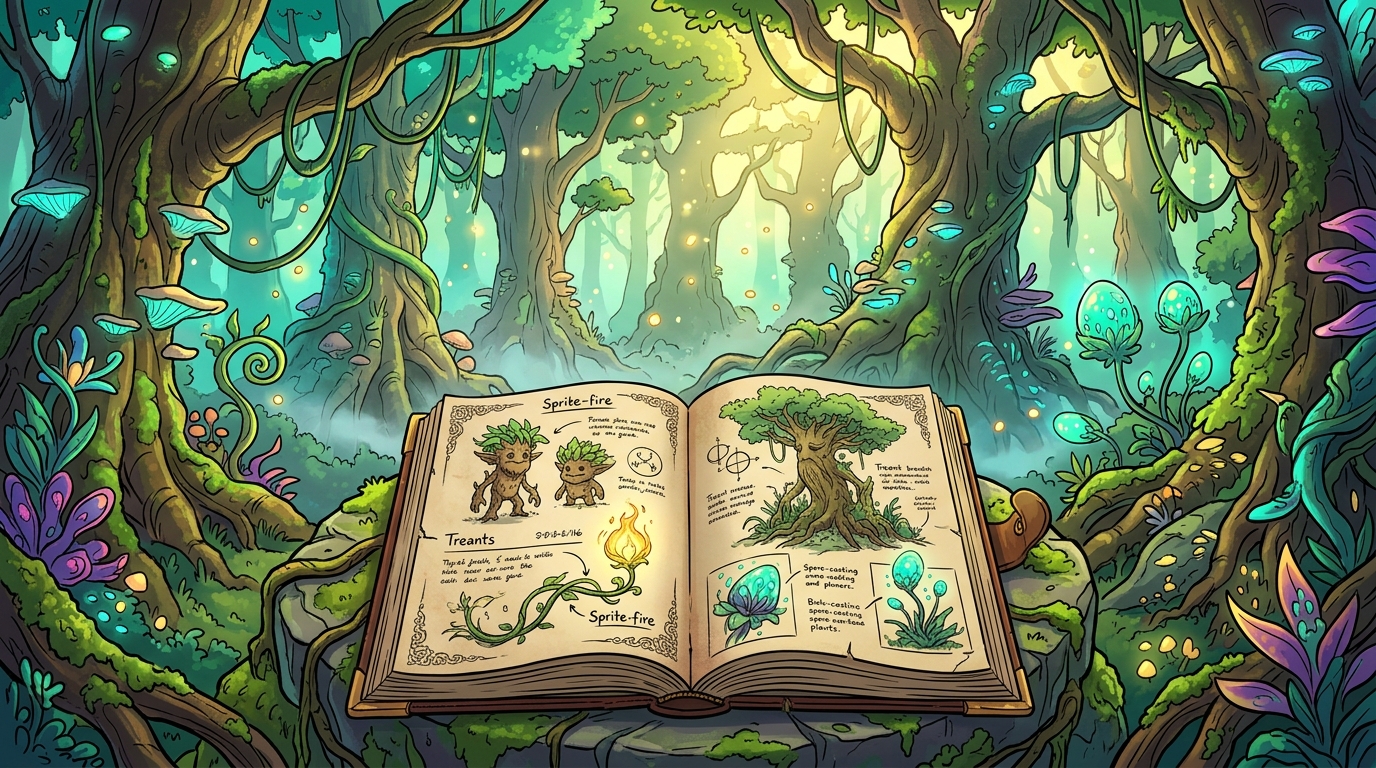
Imagine walking through a woodland that feels so real you can almost smell the damp pine needles and hear the snap of a twig underfoot. Creating a setting like this is about more than just drawing circles on a map; it requires a thoughtful forest worldbuilding guide to bring your ecosystem to life. Whether you are crafting a dense jungle for a sci-fi adventure or a misty deciduous grove for a fantasy quest, your forest should feel like a living, breathing character.
Immersive stories, from the towering redwoods of Star Wars to the ancient, sentient trees in The Lord of the Rings, rely on realistic layers and climate logic. You can build tension by changing the seasons or create mystery by hiding ancient ruins beneath a thick tropical canopy. By understanding how different biomes work, you give your readers a vibrant world that responds to every footstep and every change in the weather.
Choosing the right forest biome is the first step in making your fantasy woods feel like a living character in your story. You might want the thick, humid air of a tropical rainforest where life grows in every direction and danger hides behind giant ferns. These settings are perfect for stories about ancient, hidden cities or biological hazards that test your characters' survival skills. Because these forests have constant rain and heat, they offer a lush backdrop that feels vibrant and overwhelming. Think of the dense jungle setting fantasy in books like The Lost City of Z or the moon of Pandora, where the environment itself is a force to be reckoned with.
If you want a setting that changes along with your plot, a temperate forest with its four distinct seasons is a fantastic choice. These woods allow you to play with light and mood, such as using a bright, flowering spring for a moment of hope or a skeletal, leafless winter for a scene of despair. Deciduous trees provide a familiar feel that many readers love, making it easy for them to picture your heroes trekking through crunchy autumn leaves. Many classic fantasy tales, including parts of The Lord of the Rings, use these seasonal shifts to show the passage of time and the changing stakes of the journey.
For a colder and more rugged atmosphere, you can look toward the boreal forests or the taiga. These regions are filled with hardy evergreens, freezing temperatures, and a sense of vast, quiet isolation that can make a character feel very small. A boreal setting is ideal for stories focused on endurance, where the biting wind is just as much of an enemy as any monster. Whether you are building a sci-fi outpost on a chilly planet or a kingdom in the far north, the type of trees you choose will instantly tell your reader what kind of adventure to expect.
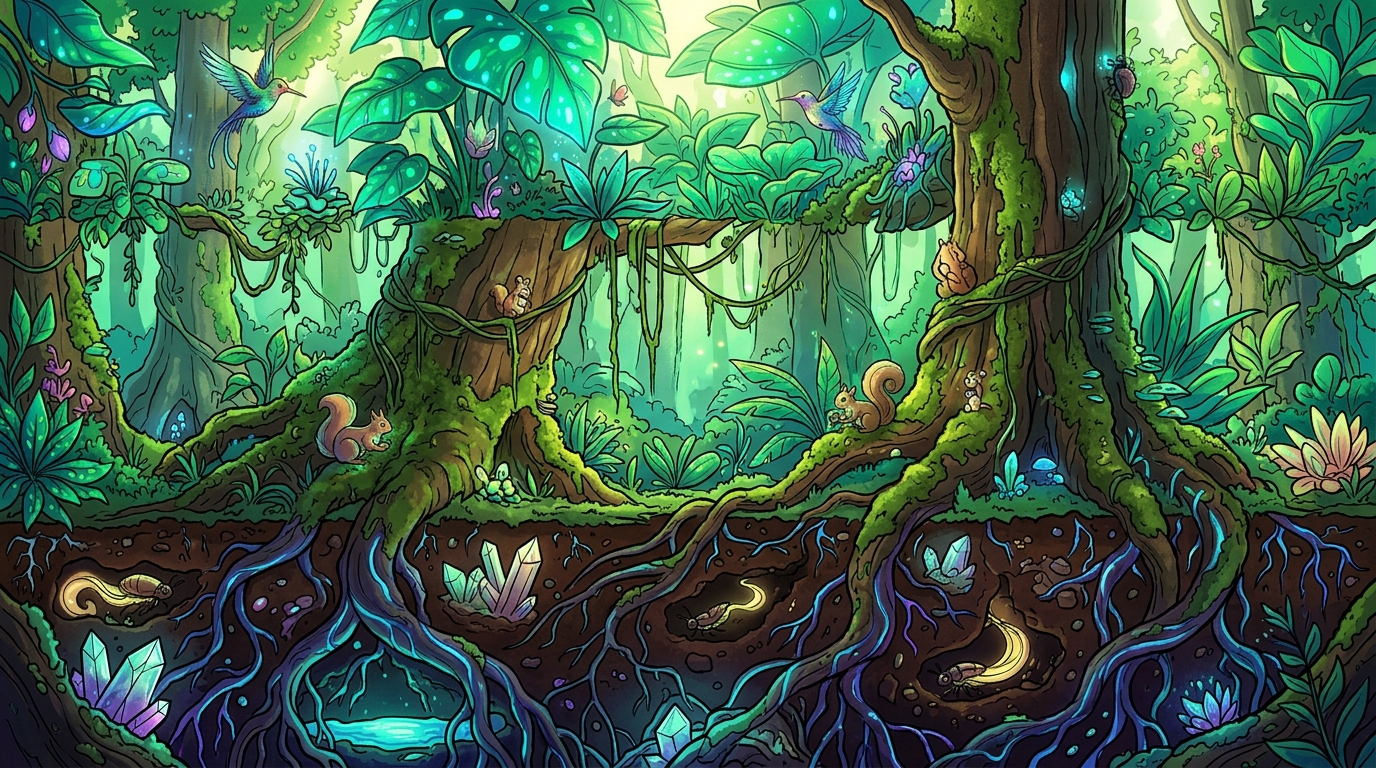
Think of your forest as a skyscraper made of leaves and bark where every floor offers a different atmosphere for your characters to explore. The canopy is the penthouse of the woods, filled with bright sunlight and a tangled highway of branches that can support entire civilizations. You can imagine nimble scouts leaping between treetops or hidden villages built into the giant trunks, far above the dangers of the ground. When you focus on these vertical layers, you create a sense of verticality that makes your world feel vast and three dimensional. Books like The Hobbit show us how different the world looks from the top of a tree, shifting the perspective from a dark maze to an endless sea of green.
As you move down into the understory, the light begins to dim and the air grows more humid. This middle layer is perfect for hiding secrets, as it is filled with smaller trees, shrubs, and large ferns that block your line of sight. It is the ideal place for a tense chase scene or a quiet moment where characters must navigate through thick shadows and rustling leaves. This layer acts as a buffer between the bright sky and the damp ground, creating a moody transition zone. You can use the dense foliage here to build suspense, making your readers wonder what might be lurking just a few feet away behind a wall of vines.
The forest floor is the foundation of your ecosystem, where the cycle of life and death is most visible among the roots and fallen logs. This is a world of moss, colorful fungi, and rich soil that holds the history of the woods in its layers of decaying needles. You can place ancient ruins or hidden burrows here, forcing your heroes to tread carefully over tangled roots that seem to reach out like fingers. In many classic fantasy stories, the ground level is where the most ancient and mysterious magic resides, often tied to the very heart of the earth. By populating this lowest level with unique textures and smells, you ground your readers in a world that feels solid and alive.
To make your forest feel truly magical, you should design plants that serve a purpose beyond just looking pretty. Think about how a glowing moss might light a path for nocturnal creatures or how a tree with metallic bark could protect itself from fire breathing predators. These interactions create a believable ecosystem where every leaf and root has a job to do. You can see great examples of this in Jeff VanderMeer's Annihilation, where the flora feels like a living, breathing character that reacts to the people around it. When you give your plants a function, your readers will feel like they are stepping into a world that actually makes sense.
Sentient woodland life adds another layer of mystery and wonder to your setting. Instead of sticking to basic animals, try creating creatures that share a deep, symbiotic relationships bond with the trees themselves. Maybe your forest is home to spirits that only wake up when a specific flower blooms, or perhaps the birds communicate through the rustling of the canopy. This approach is used beautifully in Naomi Novik's Uprooted, where the woods feel ancient and possess their own terrifying intelligence. By focusing on these unique connections, you turn a simple collection of trees into an unforgettable fantasy world that keeps readers coming back for more.
To bring your forest to life, you should consider how your civilizations treat the wood around them. You can decide if your people are careful stewards who only take what they need or if they are industrial giants clearing vast swaths of land for profit. In many fantasy novels, like the classic works of J.R.R. Tolkien, the way a culture interacts with trees often reveals their moral heart. You might imagine hidden villages built high in the canopy using living branches as bridges, or perhaps loggers who accidentally wake up something ancient and angry. Think about the tools they use and how the smell of fresh sawdust or woodsmoke changes the atmosphere of your setting.
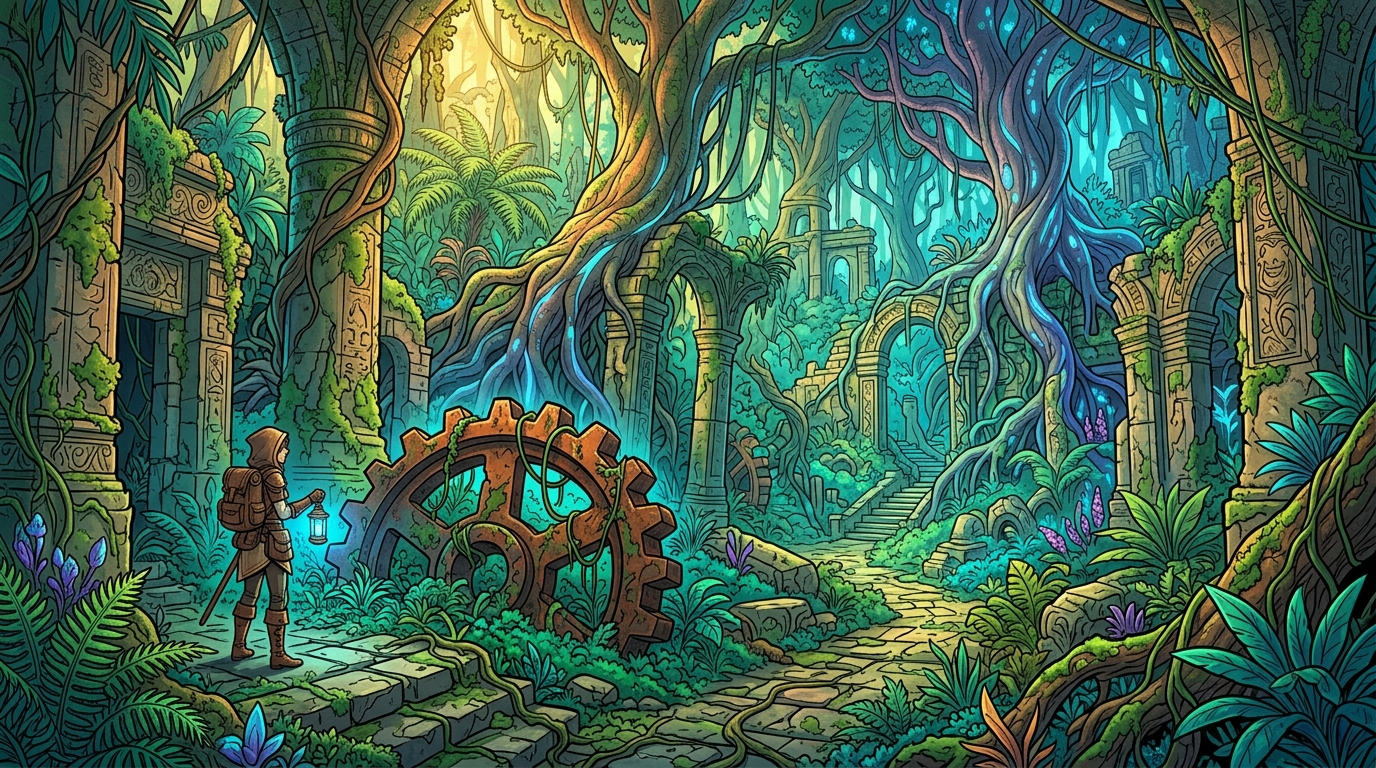
History truly shines when you scatter remnants of the past beneath the leafy floor for your readers to find. You can place crumbling stone arches covered in moss or half sunken statues that hint at a kingdom long forgotten by time. These ruins serve as silent storytellers, showing that the forest was not always wild and that people once thrived where wolves now hunt. When your characters stumble upon a paved road being reclaimed by roots, it creates an immediate sense of mystery and wonder. This technique is used effectively in books like The Name of the Wind, where the overgrown remnants of old structures make the world feel deep and lived in.
The interaction between nature and humanity is a dynamic process that should shift as your story progresses. You can show the scars of an old war through groves of trees that grow in strange, twisted patterns over ancient battlefields. If your world has magic, perhaps the ruins are not just stone but are humming with leftover energy that affects the local plants and animals. By adding these layers of human impact, you transform a simple collection of trees into a place with a soul and a memory. Your readers will love the thrill of uncovering these secrets as they journey through the dense thickets and sunlit glades you have created.
Building a memorable forest is all about finding the perfect balance between real-world science and your own creative imagination. By moving beyond simple rows of trees and thinking about how layers of life interact, you create a setting that feels truly alive. Your readers will notice when a forest has its own history, from the way the sunlight hits the mossy floor to how the local creatures react to magic. Think of your woodland as a character that grows and changes based on the climate and the stories you want to tell.
Whether you are crafting a frozen boreal expanse like the haunted woods in George R.R. Martin's A Song of Ice and Fire or a glowing tropical jungle, focus on the sensory details. These specific ecological choices help ground your fantasy elements, making the supernatural parts of your world feel even more impactful. You can use the changing seasons of a temperate forest to mirror the mood of your plot or use a dense canopy to hide ancient secrets. Every leaf and shadow is an opportunity to pull your reader deeper into the adventure you have built.
Now that you have the tools to design a dynamic ecosystem, you can focus on the exciting journey your characters will take through the brush. Remember that the best worldbuilding serves the story by creating obstacles and wonders that feel natural to the environment. You can further enhance your setting by mastering fantasy map design to see how other authors handle these wild spaces in their own unique ways. If you want to explore a completely different environment, you might consider the magic of desert setting fantasy where survival is an art form. With a solid ecological foundation, your woodland will become a place that readers are eager to visit again and again.
Think about the mood you want to set for your characters. A tropical rainforest works perfectly for high-energy survival adventures, while a temperate forest allows you to use changing seasons to reflect the emotional journey of your plot.
You can make your woods come alive by focusing on sensory details like the smell of damp pine needles or the sound of snapping twigs. When the environment reacts to your characters' footsteps and the weather, it stops being a static map and starts feeling like a living entity.
Seasons are a great tool for building tension or hope in your narrative. You might use a bright, flowering spring to signal a new beginning, or a skeletal, leafless winter to create a sense of despair and isolation. If you are looking for inspiration, you can check out the best winter fantasy reads to see how other authors handle these cold environments.
Many iconic stories use these techniques, such as the towering redwoods on the forest moon of Endor in Star Wars. J.R.R. Tolkien also mastered this by creating the ancient, sentient trees of Fangorn Forest in The Lord of the Rings.
Using realistic layers and weather patterns makes your world feel grounded and believable to your readers. When you understand how a specific biome works, you can hide ancient ruins or biological hazards in ways that make sense for that environment.
You can create a sense of wonder by hiding secrets beneath a thick tropical canopy or within a misty grove. These hidden elements encourage your readers to explore the world alongside your characters, making the discovery feel earned and exciting.