
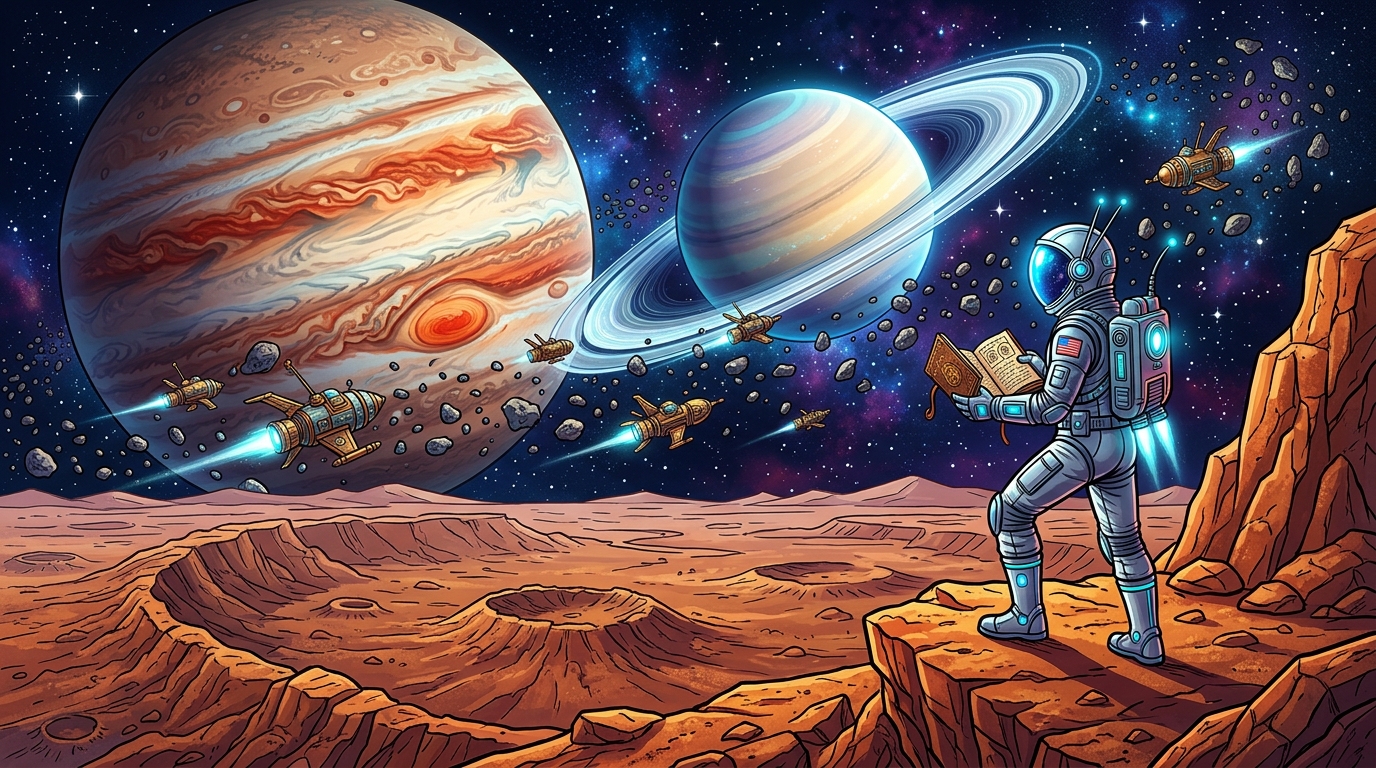
Imagine stepping out of your front door and traveling across the stars, witnessing sights that once only existed in the pages of science fiction. Modern solar system travelogues are no longer just imaginary stories; they are real-time reports sent back by robotic explorers venturing into the great unknown. You can now experience the thrill of discovery from your own home, following along as these brave scouts face the fiery breath of the Sun and the icy silence of deep space.
Right now, we are witnessing history as the Parker Solar Probe shatters records, flying faster and closer to our star than any human-made object ever has. On its latest trip, it zipped past the Sun at over 400,000 miles per hour, acting as our eyes and ears in a place where no person could survive. These missions bring the wonders of the universe to life, turning the vast reaches of space into a story you can follow every single day.
Imagine you are standing on the deck of the fastest ship ever built, racing through the void at a staggering 430,000 miles per hour. This is the reality for the Parker Solar Probe, a robotic pioneer that recently completed its 27th close encounter with our home star in March 2026. It does not just observe from a distance, but instead flies directly into the sun's glowing outer atmosphere to sample the heat. You can think of this mission as the ultimate travelogue from the edge of a furnace, where the ship must survive temperatures that would melt ordinary steel. These daring maneuvers allow us to see the solar wind and magnetic fields in ways that were once only possible in the pages of hard science fiction.
The engineering behind this journey is just as fascinating as the destination itself. To protect its delicate instruments, the probe hides behind a thick carbon composite shield that keeps the interior at a comfortable room temperature while the outside face glows white hot. During its record-breaking flybys, the ship passes within 3.8 million miles of the solar surface, which is closer than any object has ever ventured before. This incredible proximity allows the probe to send back data that feels like a postcard from the heart of the solar system. By studying these extreme conditions, we gain a practical understanding of how solar storms can affect our technology and daily lives back on Earth.
If you love stories about the logistics of space travel or the beauty of exploring distant worlds, this real-life mission offers plenty of inspiration. The Parker Solar Probe bridges the gap between technical science and the wonder of discovery, making the sun feel like a tangible place we can actually visit. Every high-speed pass provides fresh insights into the physics of our universe, proving that the truth of space exploration is often as exciting as a best-selling novel. As the ship continues its trek through the corona, it reminds us that the spirit of adventure is alive and well. We are no longer just looking at the stars, because we are finally learning how to touch them.
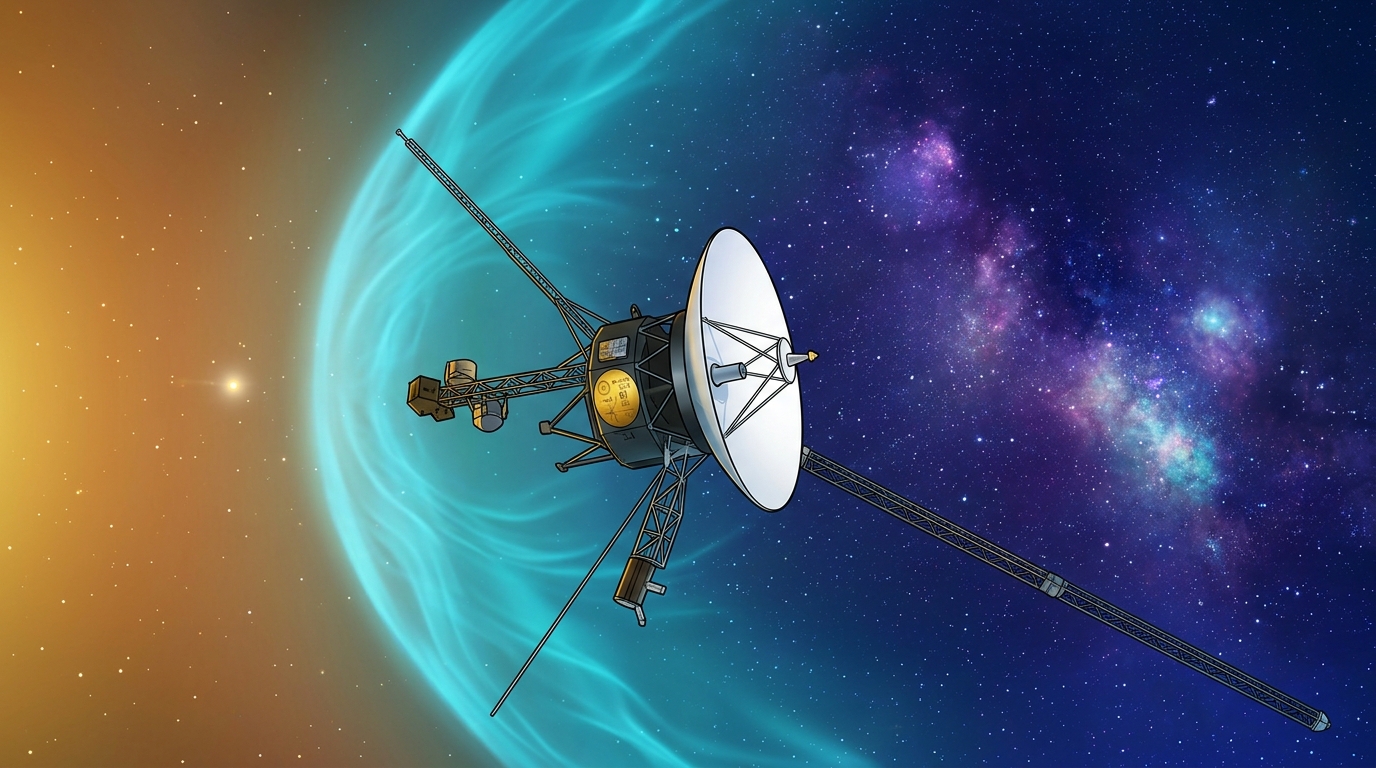
Imagine a message traveling across the stars for nearly two full days just to reach your computer screen. This is the reality for the Voyager twins, the most distant explorers in human history, as they drift through the silent territory beyond our sun's protective bubble. These spacecraft act as our eyes and ears in the interstellar void, sending back data that reads like a gritty, realistic science fiction novel. You are witnessing a true marathon of engineering where every bit of information helps us understand the logistics of surviving in deep space. Their journey is a testament to the beauty of long-term exploration and the quiet wonder of the unknown.
The stories these probes tell are not about warp drives or alien battles, but about the fascinating reality of the cosmic environment. As they move further away, they encounter the strange boundary where the solar wind finally dies down and the cold pressure of the galaxy takes over. Reading their updates feels like holding a postcard from the very edge of the map, reminding us that the universe is vast and mostly empty. You get to experience the thrill of discovery through these robotic pioneers that have outlived almost all expectations. They prove that the most compelling tales of space travel are often found in the steady, determined pulse of a machine far from home.
If you love hard science fiction that focuses on the gritty logistics of space travel, today’s real-world missions are a goldmine of inspiration. These robotic explorers are currently acting as our eyes and ears, sending back travelogues that feel like they were ripped straight from the pages of a high-stakes novel. For instance, the Parker Solar Probe recently completed its 27th close approach to the Sun, moving at a staggering 430,000 miles per hour through the solar corona. These incredible feats of engineering provide the perfect foundation for authors who want to capture the true wonder and danger of the journey itself. You can find this same spirit of exploration in books like Project Hail Mary, where scientific accuracy meets the thrill of the unknown.
There has never been a better time to stock your bookshelf with stories that bridge the gap between technical manuals and grand space operas. Our curated cosmic deals offer you the chance to explore worlds where planetary exploration feels grounded and breathtakingly real. Whether you are interested in the silent void of interstellar space or the thrill of claustrophobic space station settings, these stories bring the vastness of the universe right to your home. Grabbing these limited-time offers allows you to experience the joy of discovery without breaking the bank. Don't miss out on the chance to explore the next frontier through the eyes of characters who brave the same physics our real-life probes encounter every day.
The solar system is no longer a silent mystery, but a collection of vivid destinations waiting for you to explore through the pages of hard science fiction. As you reflect on the high-speed transit of the Parker Solar Probe or the lonely beauty of the outer planets, you can see how the logistics of space travel create a bridge between reality and imagination. These travelogues turn technical data into a sensory experience, allowing you to feel the intense heat of the solar corona or the stillness of the void. By focusing on the journey itself, these stories capture the true wonder of planetary exploration without losing sight of the scientific facts that make it possible.
Your next great adventure is just a chapter away, and there has never been a better time to enjoy a new sci-fi world. Whether you are looking for a gritty story about asteroid mining or a space murder mysteries account of a first landing on Mars, you can find incredible books that respect the laws of physics while fueling your curiosity. Keep an eye out for limited-time deals on digital storefronts, as they offer a perfect chance to build your library of space exploration tales at a great value. The vastness of the galaxy is calling, so grab a new book and prepare to launch into your next favorite reading experience.
Think of it as a real-life science fiction adventure where robotic scouts act as your eyes and ears in deep space. These missions send back live reports and stunning data that let you follow a journey across the stars from the comfort of home.
This incredible robotic pioneer reaches speeds of over 430,000 miles per hour as it races toward the Sun. It is the fastest human-made object ever built, moving quickly enough to bridge the gap between our world and the edge of a solar furnace.
The probe stays safe by hiding behind a specialized carbon composite shield that takes the brunt of the solar fire. While the outside face glows from the heat, the instruments inside stay at a comfortable room temperature so they can keep recording the adventure.
Right now, these journeys are too dangerous for people because of the extreme heat and radiation near the Sun. Instead, we use these brave robotic explorers to go where no person could survive, turning their data into stories we can all enjoy.
The mission focuses on sampling the solar wind and studying magnetic fields directly inside the Sun's outer atmosphere. These daring maneuvers give us a front-row seat to cosmic forces that used to exist only in the pages of hard science fiction books.
You can often find limited-time deals on epic space operas and discovery stories through digital book retailers and library apps. Keeping an eye on these sales is a great way to fuel your curiosity for the universe without breaking your budget. For those who prefer a mix of genres, you might also enjoy science fantasy books that blend advanced tech with mystical elements.