
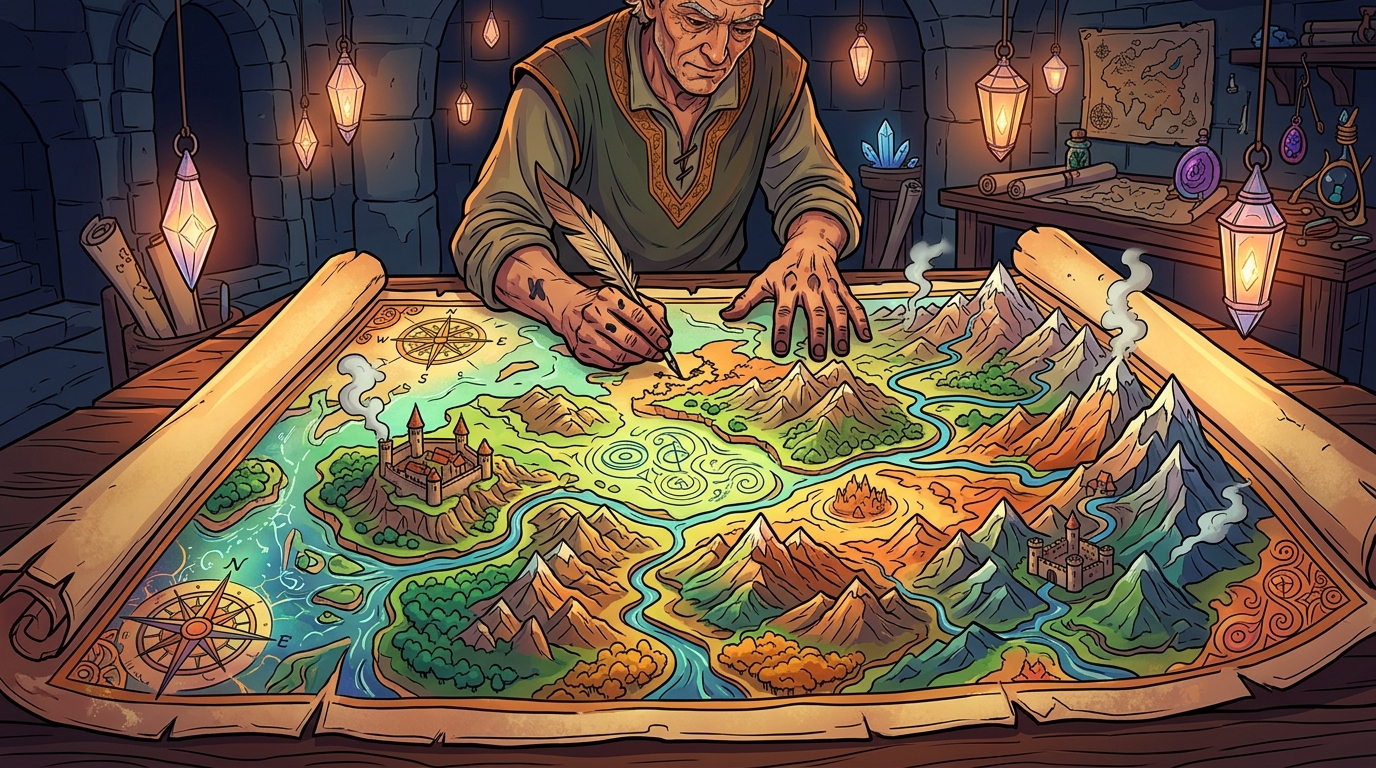
Imagine opening a new book and finding a sprawling, hand-drawn world waiting for you on the very first page. Whether you are a writer building a kingdom or a reader tracking a hero’s journey, fantasy map design is the secret ingredient that makes a fictional land feel real. Modern mapping tools have reached an incredible peak, blending classic artistic styles with smart technology to help you visualize every mountain range and hidden tavern in seconds.
You no longer need to be a professional artist to create a stunning, interactive world that feels like it’s breathing. New features allow you to link your maps directly to your lore, turning a static image into a living guide for your adventures. From lush 3D forests to isometric castle ruins, these modern tools make it easier than ever to lose yourself in a story.
Geography is much more than just a background for your characters to walk across; it is the silent narrator that shapes their entire way of life. When you place a towering mountain range between two nations, you are creating a natural barrier that might lead to distinct languages or long-standing isolation. A coastal city will naturally focus on trade and exploration, while a village tucked deep within a dense forest might develop a culture centered on secrecy and woodcraft. By thinking about how landforms dictate movement and resources, you can make your world feel like a living, breathing place.
Rivers and coastlines are the lifelines of any civilization, often serving as the primary highways for trade and communication. You can use these waterways to explain why certain cities are wealthy and powerful while others struggle in remote, arid regions. If a kingdom controls the only safe mountain pass or a strategic river crossing, that geographic advantage becomes a central plot point for your story. These physical details help readers understand the stakes of a conflict without you needing to explain every bit of history.
Modern tools and interactive platforms now make it easier than ever to link your map directly to your lore. You can use smart mapping software to visualize how a desert setting might expand or how a forest provides a natural defense against invading armies. These visual aids are not just for show, as they help you stay consistent with your worldbuilding while providing a fun way for readers to explore your universe. Whether you are an aspiring author or a dedicated fan, understanding the why behind a map makes the journey through a new book even more rewarding.
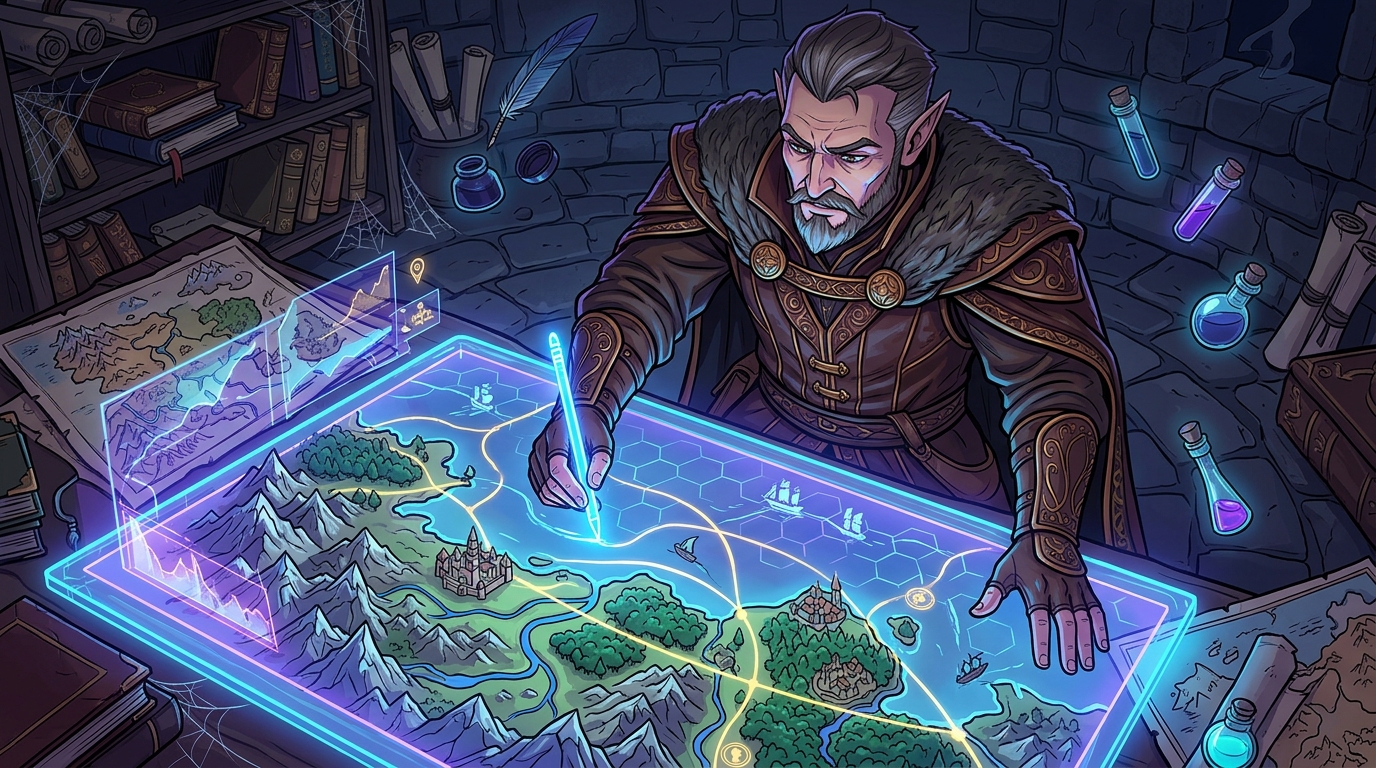
Designing your own fictional continent no longer requires years of art school or a steady hand with a quill. Modern digital tools have transformed map-making into an accessible joy, allowing you to focus on the lore of your world rather than the technical difficulty of drawing a mountain range. You can now use smart software that understands geography, helping you place rivers and forests in ways that look natural and professional. These programs often come with beautiful pre-made assets, so you can drag and drop hand-drawn icons to create a masterpiece in minutes. It is an exciting time to be a worldbuilder because the barrier between your imagination and a finished map has finally disappeared.
The latest wave of generative technology acts like a creative partner that can quickly turn a rough sketch into a detailed landscape. If you have a general idea for a kingdom, you can use these tools to prototype different layouts or auto-fill a city with bustling streets and cozy taverns. This is especially helpful for authors who need to visualize their characters' journeys or fans who want to see the physical layout of their favorite book series. Instead of struggling with perspective or shading, you can experiment with different styles until the map perfectly matches the mood of your story. These digital assistants handle the heavy lifting, giving you more time to name your oceans and hide secrets in your forests.
Beyond just looking pretty, modern maps are becoming living documents that connect directly to your worldbuilding notes. You can now create an interactive world where clicking on a castle icon opens up a window filled with history, family trees, or local legends. This makes the reading and writing experience much more immersive, as the geography becomes a gateway to the deeper secrets of your universe. Whether you are planning an epic quest or just want to track the borders of a sky island or a galactic empire, these tools ensure your world feels solid and real. Mapping is no longer just about navigation, it is a way to invite others to step inside the worlds you love.
When you look at a fantasy map, the landmarks are what truly tell the story of the land. Placing a crumbling stone tower on a lonely cliffside or a massive, bustling capital city at the mouth of a river gives your world an immediate sense of history. These visual cues act as silent narrators, suggesting that wars were fought, kings were crowned, and ancient civilizations rose and fell long before your characters ever arrived. By adding these specific points of interest, you transform a simple drawing into a living environment that feels ancient and deeply lived-in for your readers.
Creating these landmarks is also a fantastic way to spark your own imagination during the writing process. You might start with a mysterious crater on a map and suddenly find yourself dreaming up a story about a fallen star that changed the course of history. Modern mapping tools now make it easier than ever to link these locations directly to your lore, allowing you to build a cohesive universe where every ruin has a name and a reason for existing. This level of detail makes the reading experience much more immersive, as fans can follow along and feel the weight of the world's past with every step the hero takes.
Think of your map as a treasure hunt where every icon is a clue for the reader to uncover. Whether you are using traditional hand-drawn styles or the latest smart mapping software, the goal is to make the geography feel intentional and full of secrets. A well-placed mountain pass or a hidden forest grove can become the setting for your next favorite scene, bridging the gap between a flat image and a vibrant, three-dimensional story. When you take the time to name your landmarks and give them a unique look, you are inviting your audience to step out of their own lives and fully explore the wonders of your imagination.
Designing your own fantasy map is about more than just drawing coastlines and mountains on a page. It is the physical foundation of your story, giving your readers a visual guide to the epic journeys and hidden secrets within your world. By combining modern digital tools with your unique imagination, you can create a landscape that feels both vast and lived-in. Every river and forest you place helps ground your lore, making the setting feel as real as the characters who inhabit it. You have the power to turn a simple idea into a sprawling continent that invites people to get lost in its wonders.
As you move forward, remember that your map is a living document that grows alongside your narrative. Whether you are using smart tech to generate terrain or hand-drawing every detail, the goal is to enhance the sense of discovery for your audience. Think of how classic maps in books like The Hobbit or A Game of Thrones sparked your own curiosity about what lay beyond the borders. Now, you can provide that same thrill to others by building a world that is easy to navigate but full of mystery. Your passion for storytelling is the best tool you have to turn a blank canvas into a legendary realm.
You do not need any professional art skills to create a stunning world for your story. Modern mapping tools use smart technology to help you design 3D forests and castle ruins in just a few seconds.
Geography acts as a silent character that shapes how your people live and interact. Placing a mountain range between two nations can explain why they speak different languages or why they have been isolated for centuries.
Waterways are the lifelines of your civilization because they serve as the primary highways for trade and travel. Strategic river crossings or safe harbors can become central plot points by explaining why certain cities are wealthy and powerful.
New digital features allow you to link your map locations directly to your written history and notes. This turns a simple image into an interactive guide that helps you and your readers keep track of every hidden tavern and legend.
Physical barriers like deserts or mountains dictate where resources are located and how armies move. If one kingdom controls the only safe passage through a mountain range, you have an instant source of tension and high stakes for your plot. For characters who never stay in one place, the map becomes a record of their nomadic fantasy stories and shifting borders.
Start by thinking about the story you want to tell and the journey your hero will take. Focus on placing key landmarks like coastal cities or dense forests first, then use modern tools to fill in the artistic details that bring the world to life.