
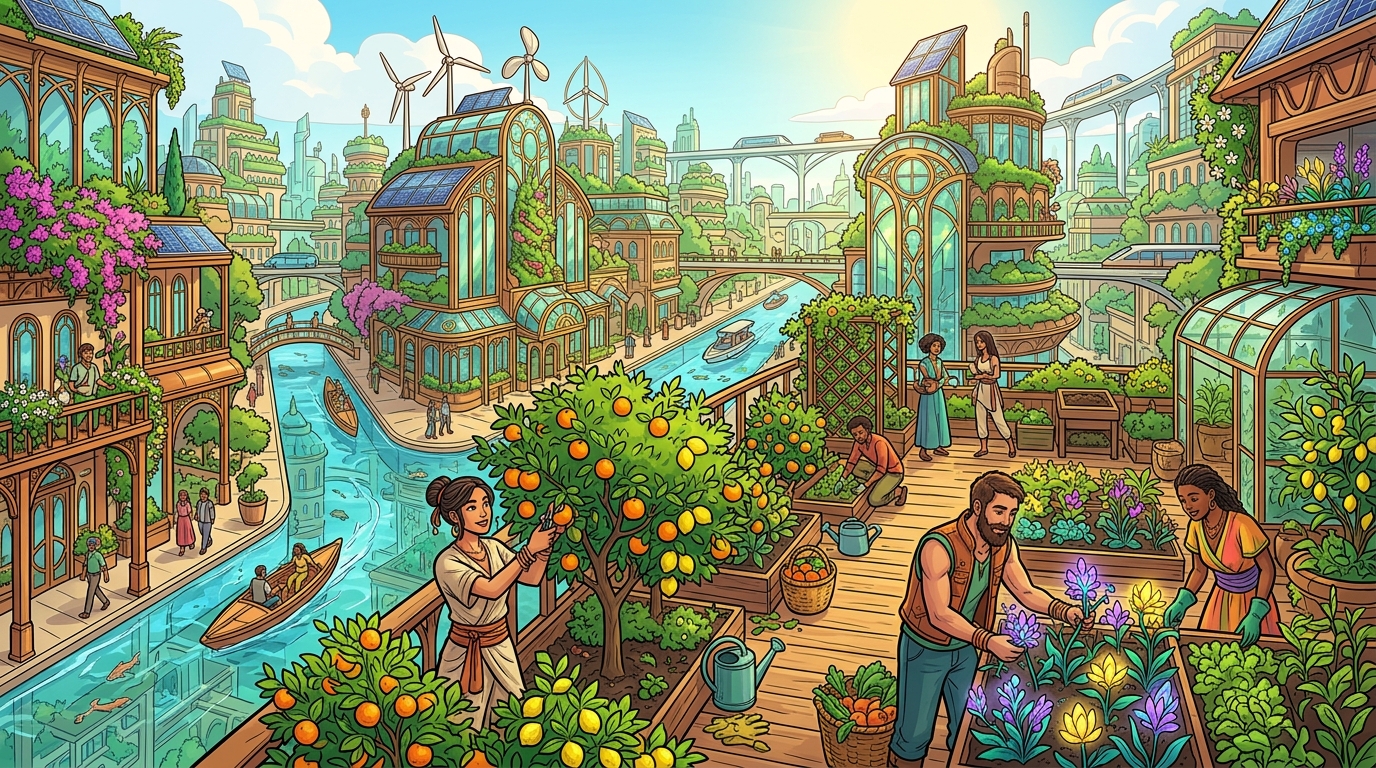
Imagine a world where skyscrapers are covered in lush vertical forests and clean energy powers every home. This isn't just a dream; it’s the heart of a vibrant movement that chooses optimism over gloom. Our solarpunk aesthetic guide explores how this sunny vision of the future blends high-tech innovation with the flowing, natural beauty of Art Nouveau. If you are tired of dark, rainy dystopias, this genre offers a refreshing breath of fresh air filled with bright greens and golden sunlight.
Whether you are a lifelong fan of science fiction or just looking for your next favorite book, there is something incredibly hopeful about these stories. Authors like Becky Chambers in A Psalm for the Wild-Built show us that technology and nature can thrive together in perfect harmony. You can find amazing deals on these inspiring tales that trade neon-lit shadows for sustainable gardens and community-driven progress. It is a wonderful time to discover a genre that celebrates radical hope and beautiful, practical solutions for our planet.
The solarpunk aesthetic draws its most beautiful inspiration from Art Nouveau, a style famous for its flowing lines and floral patterns. When you look at solarpunk art, you will notice how it rejects the sharp, cold edges of modern skyscrapers in favor of whiplash curves and organic shapes. This design choice makes cities feel less like concrete jungles and more like extensions of the natural world. By bringing back these classic styles, the movement shows us that a high tech future can still feel warm, handcrafted, and deeply connected to our history. It is an invitation to imagine a world where the buildings we live in are as graceful as the trees surrounding them.
Biophilic design takes this visual beauty a step further by turning urban centers into living, breathing ecosystems. You might see images of vertical forests where balconies are overflowing with local plants or rooftops that double as community gardens. These features are not just for show, as they help cool down cities and provide homes for birds and pollinators. Instead of trying to conquer nature with steel and glass, this approach uses technology to help plants thrive in places they never could before. It transforms every wall and walkway into an opportunity for life to flourish.
This shift in design creates a sense of radical hope by proving that progress does not have to come at the expense of the planet. When you explore stories in this genre, like the lush environments in Becky Chambers's Monk and Robot series, you see how these spaces foster a sense of peace and community. These vibrant green settings replace the dark, rainy streets of older sci fi with bright sunlight and fresh air. It is incredibly exciting to explore a world where every piece of technology is designed to serve both people and the environment. You can find this same spirit of innovation in many affordable ebooks that celebrate a greener, kinder tomorrow.
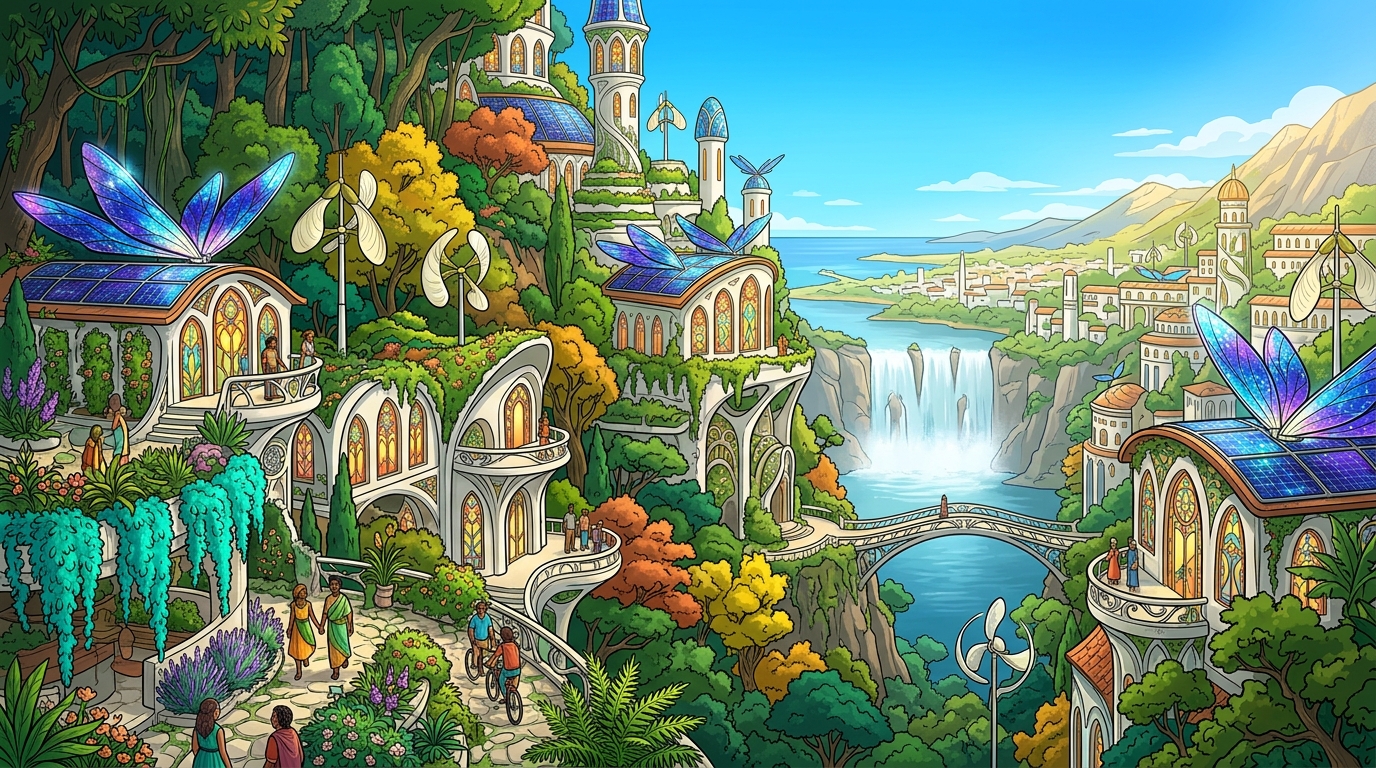
When you step into a solarpunk world, your eyes are immediately met with a vibrant burst of light and life that feels like a breath of fresh air. Unlike the dark, rainy streets of cyberpunk, this aesthetic focuses on sun-drenched yellows, leafy greens, and bright sky blues. You will notice how these colors reflect a world where clean energy and nature have finally won the day. It is an optimistic look that celebrates the sun as a source of power and the earth as a garden to be tended. These bright tones make the setting feel welcoming and warm, inviting you to imagine a future where humanity lives in balance with the environment.
The visual style often borrows from the elegant curves of Art Nouveau, blending modern technology with shapes found in the natural world. You might see buildings designed like giant trees or balconies overflowing with vertical gardens, a concept known as biophilic design. Instead of cold steel and concrete, these structures use sustainable materials that look as if they grew right out of the ground. This mix of high-tech solar panels and organic patterns creates a unique look that is both futuristic and cozy. It is a fantastic way to visualize how our cities could look if we prioritized beauty and sustainability alongside our scientific progress.
Exploring this aesthetic is a great way to find new books and art that leave you feeling hopeful about the years to come. You can see these visuals come to life in stories like Psalm for the Wild-Built by Becky Chambers, where the landscape is as much a character as the people. Whether you are browsing for your next great read or just looking for some visual inspiration, the solarpunk palette offers a joyful escape from typical gritty sci-fi tropes. It is an exciting time to explore these worlds, especially when you can find great deals on ebooks that transport you to these lush, green futures. This style proves that the future does not have to be bleak to be fascinating.
Embracing the solarpunk look is all about moving away from fast fashion and returning to materials that the earth provides. You can start your journey by looking for breathable, natural fibers like hemp, linen, and organic cotton that feel great against your skin and last for years. These fabrics often come in soft earth tones or sunny yellows that reflect the bright, optimistic world you are helping to build. Instead of buying mass produced items, you might find yourself reaching for pieces that show off their handmade quality and unique textures. It is a wonderful way to express your style while knowing your wardrobe supports a healthier planet and fair labor practices.
Radical DIY upcycling is the secret ingredient that makes this aesthetic feel so personal and rebellious. You can take old garments and breathe new life into them using visible mending, colorful embroidery, or natural dyes made from plants in your own kitchen. Many solarpunk enthusiasts even experiment with wearable technology, such as small solar panels woven into backpacks or hats to charge devices on the go. This blend of old world craftsmanship and futuristic utility creates a look that is both practical and beautiful. By repairing and customizing what you already own, you are making a bold statement against waste and celebrating your own creative skills.
Accessories in this genre often celebrate the harmony between nature and machinery through intricate, handcrafted details. You might see jewelry inspired by the flowing curves of Art Nouveau or sturdy belts designed to hold gardening tools and tech gadgets alike. Since the movement is deeply rooted in stories like Becky Chambers's Psalm for the Wild-Built, your outfits can reflect a sense of readiness for a life lived outdoors. Every button, patch, and stitch becomes a part of your story and a reflection of your values. It is incredibly exciting to build a signature look that is as functional for a community garden as it is for a high tech future.
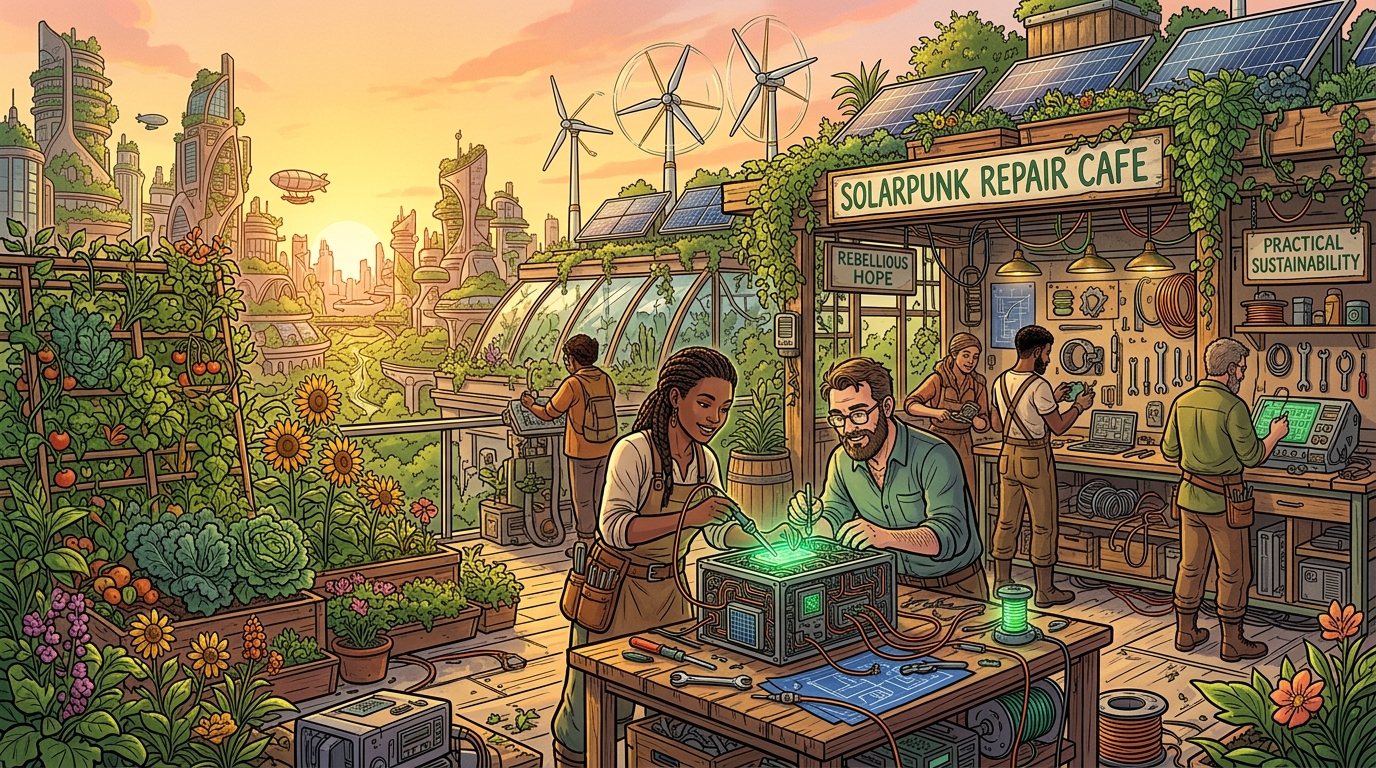
The punk in solarpunk is all about a defiant, radical optimism that refuses to give in to climate despair. Instead of waiting for a distant hero to save the day, you can embody this aesthetic right now by taking small, rebellious actions in your own neighborhood. Whether you are planting a community garden in a vacant lot or installing a small solar charger on your balcony, you are pushing back against the idea that the future must be bleak. This movement turns sustainability into a form of protest, proving that a better world is possible when we work together. It is a beautiful way to transform your anxiety into something productive and green.
You will often see this aesthetic represented by lush greenery growing over high tech glass and warm sunlight hitting polished wood. In books like Psalm for the Wild-Built by Becky Chambers, this vision comes to life through characters who value slow living and meaningful connection over constant consumption. The visual style celebrates the marriage of modern technology with ancient natural wisdom, showing that we do not have to give up comfort to live in balance with the earth. By choosing to focus on solutions and community resilience, you can discover your next favorite adventure by participating in a global shift toward a brighter tomorrow. It is an exciting time to find inspiration in these stories and bring their colorful, sunny energy into your own life.
Embracing the solarpunk aesthetic is about more than just admiring beautiful art or reading a great story. It is an invitation to swap the dark, rainy streets of cyberpunk for a world filled with sunlight and greenery. You can start bringing this hopeful energy into your own life by looking for books that feature biophilic cities and community driven heroes. Watching nature and technology work together in a story like Becky Chambers's Psalm for the Wild-Built can give you a fresh perspective on what the future might look like. This shift in mindset helps you see the potential for beauty and sustainability in every corner of your daily routine.
Beyond the page, you can let solarpunk inspire your personal style and your home environment. Think about incorporating the flowing lines of Art Nouveau or adding more leafy plants to your living space to mimic those famous vertical forests. Keeping an eye out for hopepunk book recommendations is a fantastic way to build a library that reflects these bright values without breaking your budget. You might also enjoy exploring silkpunk book recommendations to see how other genres blend organic materials with advanced technology. If you crave even more greenery, you can explore forest core fantasy books to see how other authors imagine the deep connection between humanity and the wild. Every story you read and every small green change you make helps turn that vision of a sunny, sustainable world into a reality. The journey toward a greener future is much more exciting when you have a stack of inspiring books to lead the way.
Solarpunk is a visual and cultural movement that imagines a future where technology and nature live in perfect harmony. It swaps the dark, rainy vibes of typical sci-fi for bright greens, golden sunlight, and sustainable cities filled with plants.
This aesthetic borrows the flowing lines and floral patterns of Art Nouveau to move away from cold, sharp architecture. It focuses on whiplash curves and organic shapes that make buildings feel like a natural part of the environment rather than just concrete blocks.
Biophilic design turns urban spaces into living ecosystems, such as skyscrapers covered in vertical forests and balconies overflowing with gardens. It is a practical way to imagine cities that clean the air and provide food while housing people in beautiful, natural settings.
A great place to start is A Psalm for the Wild-Built by Becky Chambers, which beautifully explores the relationship between humans and nature. You can often find amazing deals on these types of stories that focus on community-driven progress and radical hope.
Yes, it is the opposite of a dark dystopia because it chooses optimism and solutions over gloom and destruction. Instead of neon-lit shadows, you get to explore worlds powered by clean energy where communities work together to build a better planet.
It is a wonderful way to discover inspiring tales that offer a refreshing breath of fresh air and practical visions for the future. These books celebrate the joy of innovation and show us that a high-tech world can still be warm, handcrafted, and deeply connected to our history.