

The best reading challenge ideas do more than help you reach a number. They make choosing your next book exciting. You might explore 12 fantasy worlds, read 20 pages a day, switch between print books, e-books, and audiobooks, or discover a new favorite such as A Psalm for the Wild-Built or The Fifth Season. Flexible goals make it easier to keep reading, even when your schedule changes.
A good challenge can also help you make the most of limited-time book deals without buying books you will not read. Set a theme, choose a format, or create a small monthly budget so each pick feels intentional. Whether you want epic quests, strange new planets, or more time with old favorites, the right challenge turns your reading list into an adventure.
Page-based goals give you a clear target without turning reading into a race. Try reading five or ten pages each day, or set a monthly goal that fits your schedule. This approach works well when you want time to explore a longer fantasy book, such as The Way of Kings, without worrying about finishing quickly. You can also choose a page goal for a theme, such as reading 300 pages of science fiction this month. Each small reading session brings you closer to your goal and may help you discover your next favorite world.
A time-based challenge measures the minutes you spend reading instead of the number of books you finish. Set aside 15 minutes before bed, listen to an audiobook during a walk, or aim for 90 reading minutes each week. You can count print books, e-books, and audiobooks, so the challenge can fit your real routine. A weekly goal also gives you room to enjoy a few chapters of A Psalm for the Wild-Built or revisit a favorite series without feeling behind. The focus stays on making space for stories, not rushing through them.
Reading streaks and monthly reading-day goals can make your habit feel steady and rewarding. You might read for at least five minutes on seven consecutive days, or choose 12 reading days each month and mark them on a calendar. Add a seasonal prompt to keep the challenge fresh, such as reading a space adventure in summer or a magical winter tale in December. These flexible goals encourage you to return to the challenge throughout the year and choose books that match your mood. Missing a day does not erase your progress. The aim is to build a lasting habit, not a perfect record.
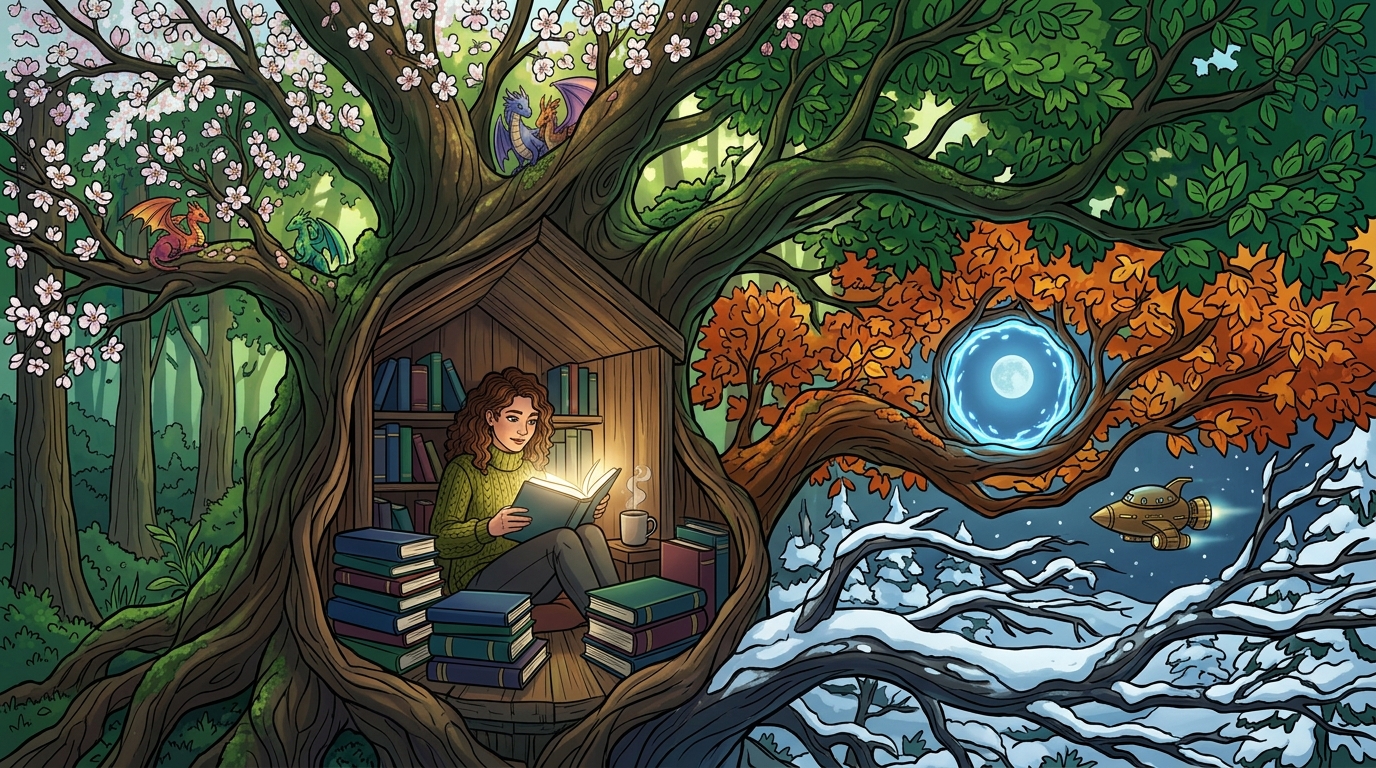
Seasonal reading prompts make it easier to choose your next book without turning the challenge into a race. In winter, pick a mystery with a snowy setting, such as Agatha Christie’s The Sittaford Mystery, or try a tense thriller that keeps you guessing. Spring is a good time for stories about renewal, fresh starts, or second chances, from a character-driven novel to a book such as The Secret Garden. You can also match the season with a practical goal, such as reading for 20 minutes a day or finishing one short book before the month ends.
Let summer lead you toward an adventure, whether that means a sweeping fantasy, a travel story, or a science fiction journey through a new world. You might read A Wizard of Earthsea for classic fantasy, The Long Way to a Small, Angry Planet for a space adventure, or choose a fast-paced audiobook for a road trip. When autumn arrives, reach for a fantasy or horror read with a mysterious house, strange magic, or an eerie forest. A book such as Mexican Gothic can bring the right atmosphere, while a seasonal e-book or audiobook deal may make it easier to try something new for less.
Keep each prompt flexible so you can return to the challenge throughout the year without feeling behind. Add genre goals such as reading a debut author, choosing a translated book, revisiting a classic, or exploring a genre you usually skip. You could also set a format goal by reading one print book, one e-book, and one audiobook, or invite friends to share their seasonal picks. The best reading challenge ideas encourage discovery, so count every meaningful choice, whether you finish one book or find a new favorite world.
Build a Fantasy Sci-Fi World Hop by choosing a flexible set of prompts instead of a strict book count. You might visit a magical school with A Wizard of Earthsea, cross a galaxy in The Long Way to a Small, Angry Planet, or experience first contact in The Left Hand of Darkness. Add worlds with dragons, such as Fourth Wing, and dystopian settings, such as The Hunger Games, to keep each choice fresh. You can also include a standalone novel for a complete story without committing to another series.
Limited-time deals make this challenge a practical way to explore beyond your usual reading habits. Use a discounted title to try an unfamiliar author, pick up the first book in a series, or replace a book on your list when your mood changes. A deal on a sequel can also help you finish a series while the earlier books are still fresh. Keep your goal flexible by tracking worlds visited, pages read, or time spent reading instead of aiming for a fixed number of books.
Create a themed reading list that you can return to throughout the year, with prompts such as “a space opera,” “a story about dragons,” “a magical school,” “a first-contact novel,” and “a standalone.” Watch for short-term offers as you fill each prompt, since lower prices can let you sample more settings without stretching your budget. Share your progress with friends or invite them to choose a world for your next stop. By the end, you will have a reading journey shaped by curiosity rather than pressure.

A buddy read turns choosing your next book into a shared adventure. Pick a Fantasy or Sci-Fi title, set a few check-in dates, and use prompts such as “Which world-building detail stands out?” or “Would you trust this character?” You might read A Wizard of Earthsea with a friend, then compare how each of you responds to its magic and coming-of-age themes. A small group can also run a monthly recommendation swap, giving everyone a fresh title to try and a reason to return throughout the year.
Reading bingo adds structure without making the challenge feel like homework. Fill squares with flexible prompts such as a seasonal setting, a debut author, a comfort reread, or a book with a dragon, robot, or found family. You can make the board especially inviting by pairing summer with a fast-paced space adventure, autumn with dark fantasy, or winter with a cozy quest. Leave a few squares open so you can add a title from a limited-time deal or follow a recommendation that catches your attention.
Format goals help your challenge fit real life and different reading moods. Count a print book for slow weekend reading, an e-book for travel or waiting rooms, and an audiobook for commutes, chores, or long walks. Try pairing Project Hail Mary in audio with a print fantasy novel, or switch formats when a busy week makes your original plan harder to follow. The goal is to keep discovering new worlds, not to force yourself into one perfect reading routine.
The best reading challenge ideas feel exciting and manageable. You might choose a seasonal theme, such as snowy fantasy worlds in winter or space adventures for summer, or set a flexible goal based on pages, reading time, or days instead of a book count. A genre challenge can lead you to unforgettable discoveries, from the richly imagined world of A Wizard of Earthsea to the sweeping science fiction of The Long Way to a Small, Angry Planet. Give yourself permission to change your prompts when your interests shift. A challenge should support your reading, not make it feel like homework.
Keep a simple record of the books, formats, themes, and favorite discoveries you find along the way. Sharing a progress update with friends or a reading group can add encouragement and may point you toward your next great read. Seasonal prompts, new releases, and limited-time deals can also refresh your list when you need inspiration, especially when a discounted fantasy or sci-fi title fits your current mood. Stay curious and flexible, and you can return to your challenge throughout the year while continuing to find stories that surprise you.