
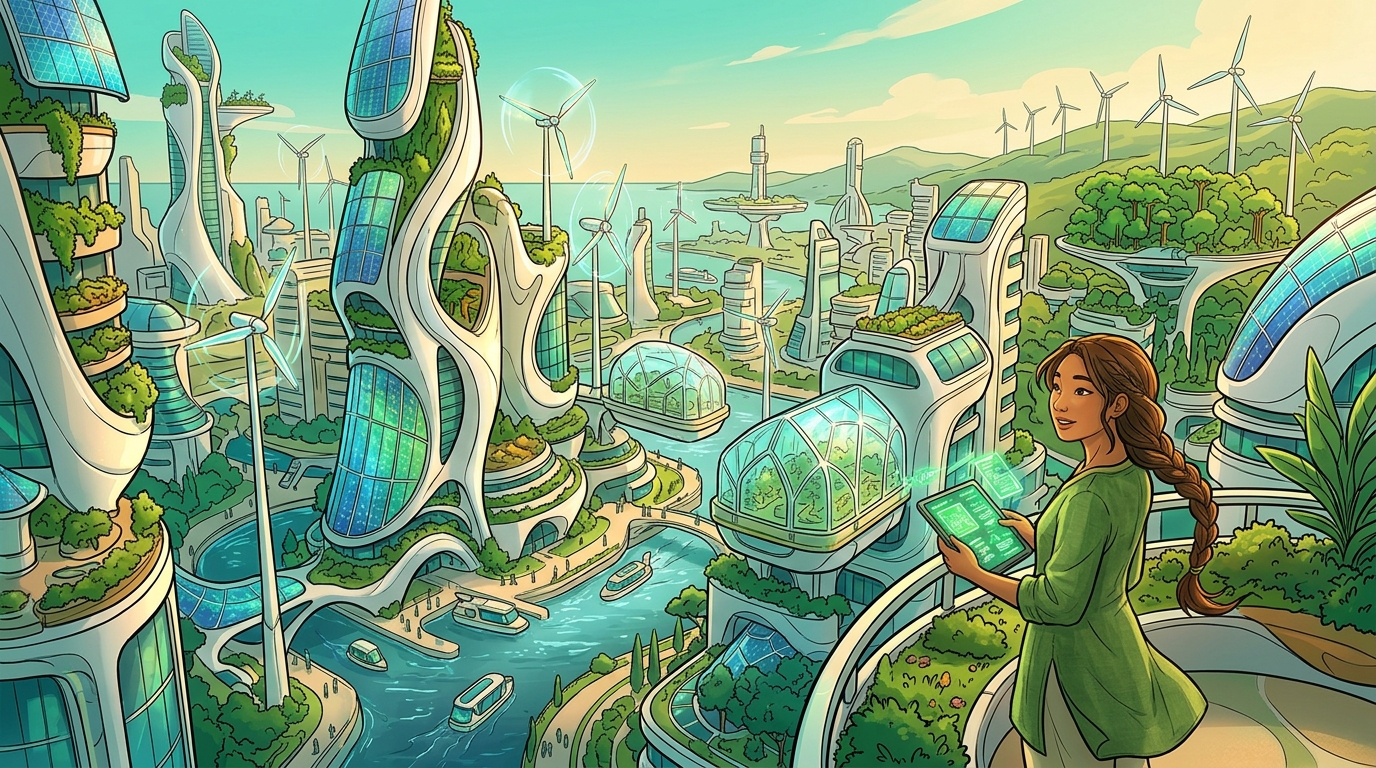
Imagine a future where cities breathe like forests and technology works in harmony with the earth instead of against it. You can explore these vibrant settings through solarpunk world building, a refreshing genre that replaces gloomy shadows with sun-drenched gardens and community-led innovation. It is an exciting time to explore these stories, especially with so many great deals available on books that trade tired doomsday tropes for bright, practical hope.
When you pick up a solarpunk novel, you aren't just reading about a pretty aesthetic; you are seeing a blueprint for a better world. These stories focus on how we can actually solve big problems through local food, shared energy, and kindness toward our neighbors. Whether you are a longtime sci-fi fan or just looking for something uplifting, these worlds offer a front-row seat to a future where humanity finally gets it right.
Building a solarpunk city starts with rethinking how buildings interact with the natural world around them. Instead of cold concrete boxes, you can imagine structures that mimic the curves of a tree or the sturdy shape of a mountain. Biophilic architecture is all about bringing the outside in, using living walls and rooftop gardens to regulate temperature and clean the air. When you write about these spaces, think of every balcony as a mini forest and every window as a frame for local flora. This approach turns an ordinary apartment complex into a vital part of the local ecosystem rather than a barrier to it.
Technology plays a huge role in keeping these green spaces thriving without being intrusive or overly complex. You can describe smart irrigation systems that use harvested rainwater to feed vertical farms, providing fresh food right where people live. These designs often use natural materials like cross laminated timber or recycled stone to reduce the carbon footprint of the build. In stories like the Monk and Robot series by Becky Chambers, we see how these sustainable choices create a cozy, lived-in atmosphere that feels both advanced and grounded. It is exciting to imagine a world where the very walls of your home help the planet breathe a little easier.
Designing these cities also means creating spaces where community and nature can meet in the middle. You might include winding walkways that prioritize pedestrians and pollinators over cars, making the city feel like a massive, functional park. Glass ceilings can be used to trap heat in the winter while allowing sunlight to reach indoor gardens all year round. By focusing on these practical details, you make your fictional world feel like a place where anyone would want to live. It is a wonderful way to show readers that a green future is not just possible, but also incredibly beautiful and inviting.
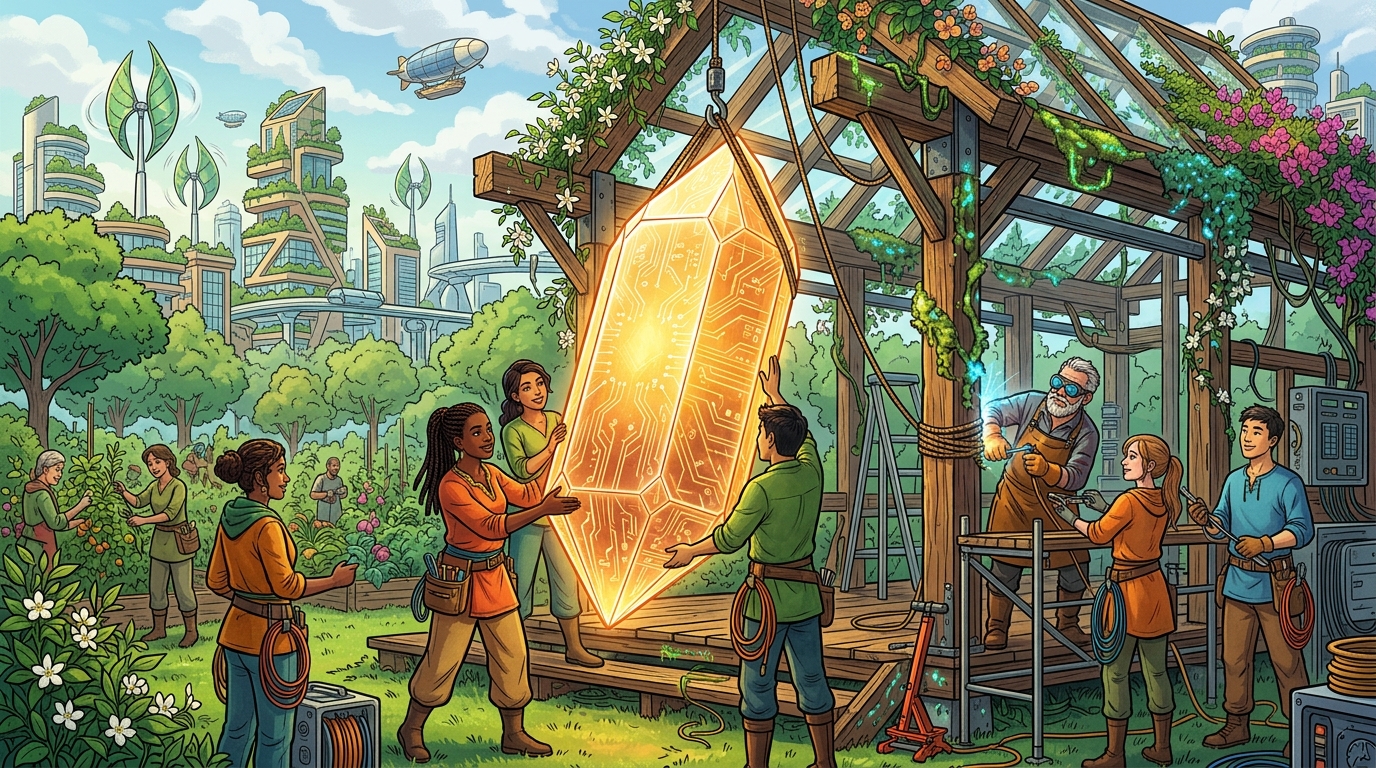
When you are building a solarpunk world, the technology should feel like a tool for empowerment rather than a mystery controlled by a distant corporation. You can imagine a neighborhood where every rooftop is covered in high-tech solar glass that feeds into a shared community microgrid. Instead of relying on a single power plant, your characters use open-source software to balance energy loads between houses and community gardens. This setup creates a sense of independence and security, showing how local neighborhoods can thrive on their own. It is an exciting way to ground your sci-fi setting in a reality that feels both futuristic and achievable.
The DIY spirit is the heart of this tech-heavy world, where repairing a solar controller is as common as fixing a leaky faucet. You can describe workshops filled with 3D printers and recycled components where neighbors gather to upgrade their energy storage systems. This hands-on approach to high tech makes the world feel lived-in and authentic to the solarpunk genre. In books like Walkaway by Cory Doctorow, we see how decentralized tools allow people to build entirely new societies outside of traditional systems. By focusing on these practical details, you help your readers visualize a future where technology serves the people directly.
Decentralized energy also changes how your characters interact with their environment and each other. When a community owns its power source, the social bonds become stronger because everyone has a literal stake in keeping the lights on. You can show how a surplus of energy on a sunny day leads to a neighborhood celebration or a collaborative project in a public workshop. This integration of sophisticated engineering with grassroots organizing turns technology into a bridge for human connection. It moves the story away from the lonely tropes of cyberpunk and into a bright, cooperative setting that feels worth living in.
When you are crafting a solarpunk world, you have the exciting opportunity to blend high-tech innovation with the restorative practices of Indigenous cultures. This balance is not about choosing between the past and the future, but rather about using cutting-edge tools like bio-mimetics and atmospheric water harvesters to support Indigenous land restoration and traditional stewardship. You can imagine cities where modular, 3D printed housing is woven into restored wetlands that were once paved over. In books like The Fifth Sacred Thing by Starhawk, we see how communities prioritize ecological health by integrating ancient wisdom into their daily survival. Your world can showcase how technology serves the earth, rather than exploiting it for profit.
Designing these sustainable systems allows you to explore how decentralized power structures empower local communities to heal their own environments. Instead of massive, destructive power plants, your setting might feature beautiful solar glass windows and micro-hydro systems that mimic the natural flow of rivers. These technical choices provide a great backdrop for stories about characters working together to replant forests or manage communal seed banks. You can take inspiration from the way Becky Chambers builds gentle, hopeful futures where humanity learns to live within its means. By focusing on these practical details, you create a believable space where innovation finally works in harmony with the planet.
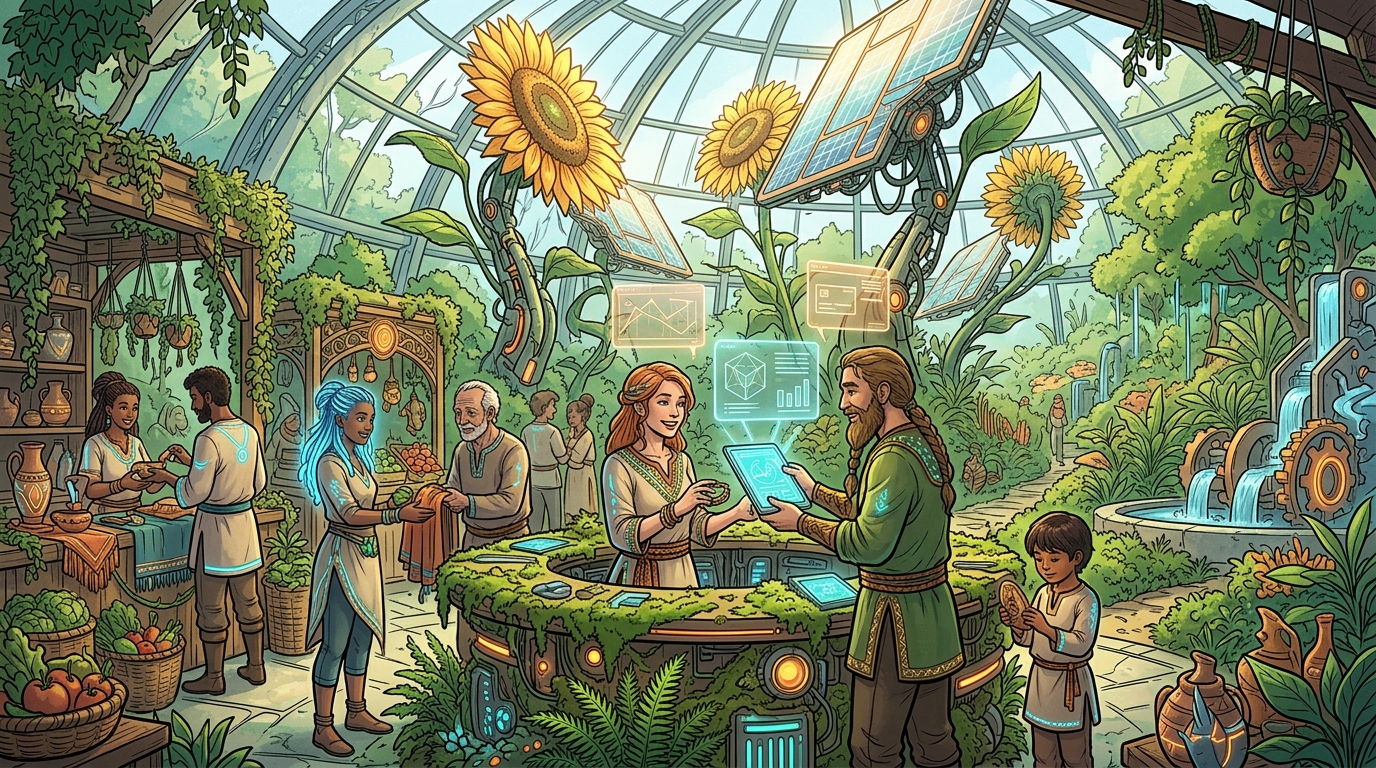
Building a solarpunk world requires you to rethink how people exchange goods and value without relying on traditional corporate structures. Instead of massive retail chains, you can design communities centered around worker-owned cooperatives where every person has a say in how the business is run. This shift changes the very architecture of your setting, replacing cold corporate towers with communal workshops and shared tool libraries. You might imagine a neighborhood where a local bakery is managed by its bakers, ensuring that the needs of the staff and the environment come before massive profit margins. These structures create a sense of direct connection between the characters and the resources they use every day.
You can also explore the beauty of gift economies and mutual aid networks to add depth to your social world building. In these societies, people provide services or goods based on community needs rather than a set price tag. Your characters might participate in a harvest festival where extra produce is shared freely, or they could use open-source technology to repair communal energy grids. This approach highlights a philosophy of radical optimism and care, showing how a society thrives when it prioritizes human well-being over accumulation. Books like The Dispossessed by Ursula K. Le Guin or the Monk and Robot series offer wonderful examples of how these non-traditional economies can feel grounded and realistic.
Focusing on these cooperative systems allows you to move away from the conflict of scarcity and toward the challenges of collaboration. You get to ask fascinating questions about how a community decides to allocate its solar power or who maintains the local vertical gardens. These practical details make your world feel lived-in and functional, proving that a sustainable future is not just a dream but a working system. By designing these grassroots structures, you give your readers a hopeful roadmap for how technology and nature can work together through human kindness. This craft-focused approach turns your setting into a vibrant, breathing example of what a better world could actually look like.
Building a solarpunk world is about more than just painting a pretty picture of a green city. You are taking on the role of an architect for a future that actually works, focusing on how people use technology to live in balance with the earth. When you design these spaces, think about the specific tools your characters use, like community microgrids or open-source farming equipment. This craft allows you to move past the typical gloomy endings found in many stories and explore what happens when humanity finally gets things right. By focusing on the nuts and bolts of a regenerative society, you make the dream of a better world feel achievable and real for your readers.
You can find inspiration for these sustainable designs in books like Psalm for the Wild-Built, where the technology feels grounded and purposeful. Look at the way these stories treat everyday objects and infrastructure as part of a larger, kinder ecosystem. Your world building should highlight the joy of DIY solutions and the power of local communities working together to solve big problems. It is an exciting time to be a creator because you get to define what a hopeful future looks like through the lens of practical innovation. Every solar panel or vertical garden you describe helps bridge the gap between our current world and a brighter tomorrow.
The most impactful stories are the ones that feel like they could actually happen. You have the chance to show your audience that a green transition is not just a fantasy, but a series of smart, human-centered choices. Keep your designs focused on decentralization and accessibility so that anyone can imagine themselves living in the spaces you create. Whether you are writing a novel or designing a game, your work contributes to a growing movement of optimism and action. Take these practical steps and discover your next favorite futuristic city books to turn your creative vision into a roadmap for a truly regenerative future.
It is a creative way to imagine a future where humanity and nature thrive together through community and green technology. You get to build worlds that focus on bright hope and practical solutions instead of the usual gloomy doomsday scenarios.
You should focus on biophilic architecture by designing buildings that mimic natural shapes like trees or mountains. Incorporate living walls, rooftop gardens, and vertical farms to turn every structure into a breathing part of the local ecosystem.
Technology in this genre is helpful and unobtrusive, working behind the scenes to support the environment. You can include smart irrigation that uses harvested rainwater or energy systems that are shared and managed by the local community.
While many sci-fi stories focus on dark, high-tech futures, this genre celebrates sun-drenched gardens and kindness. It trades tired tropes for blueprints of a better world where people solve big problems through local food and shared resources.
You can focus on sustainable and recycled materials like cross laminated timber or repurposed stone. These choices help reduce the carbon footprint of your fictional cities and show a commitment to protecting the planet.
There are many fantastic solarpunk novels available that offer a front-row seat to these optimistic futures. To find your next great read, you can discover eco-fiction book lists that trade doom and gloom for hope. Keeping an eye out for limited-time deals is a great way to discover new authors and stories without breaking your budget.