
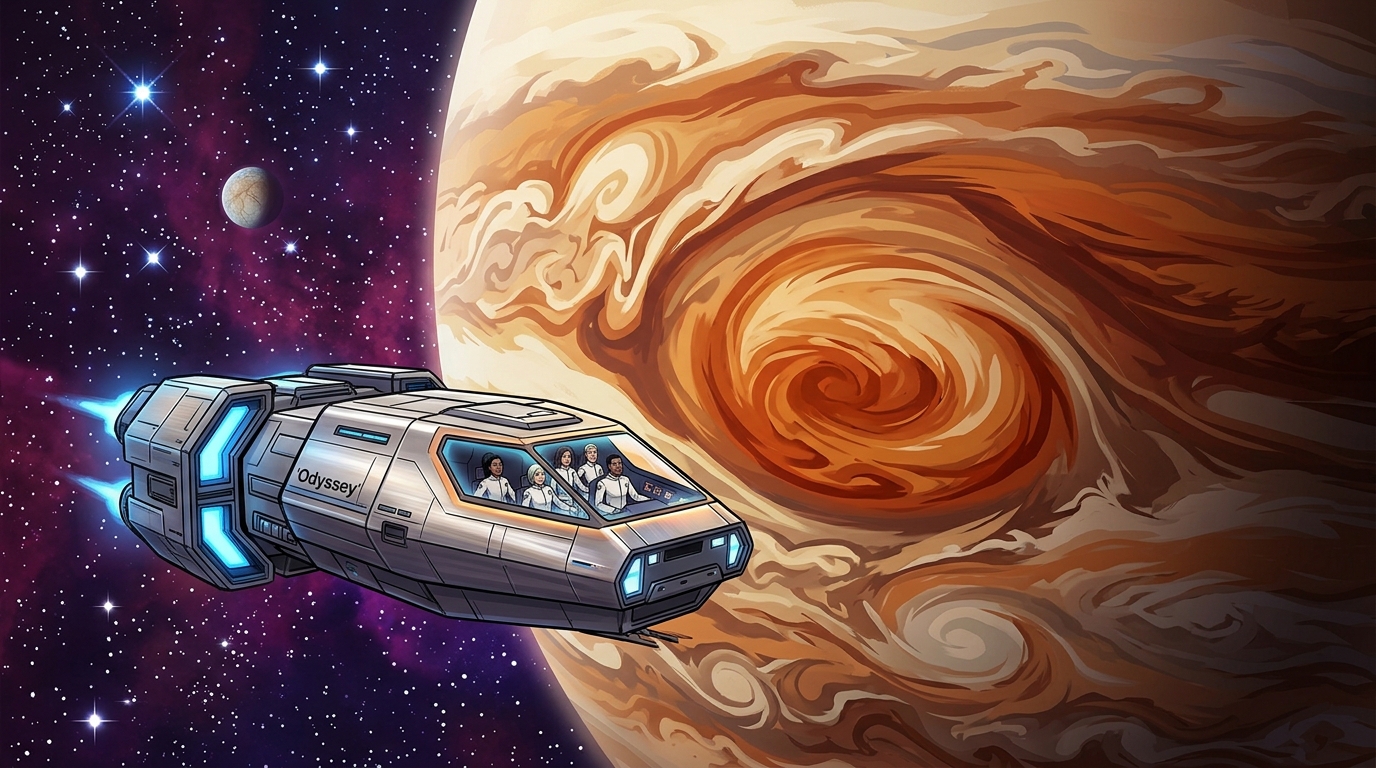
Imagine looking up at the night sky and knowing that people are actually out there among the stars. We are living in a golden age of space travel where the stories once found only in science fiction novels are finally becoming our reality. From record-breaking crewed flybys of the Moon to the construction of permanent outposts, the distance between Earth and the deep unknown is shrinking every day.
You no longer have to wait for a distant future to see humanity push past the boundaries of our home planet. As teams test new ways to dock ships in orbit and build sustainable homes on the lunar surface, the dream of reaching Mars feels closer than ever. It is an incredible time to be a fan of discovery, as real-world adventures begin to mirror the epic journeys found in your favorite space operas.
The current lunar programs represent a major shift in how you should think about space travel, moving away from quick visits and toward building a permanent home. Instead of just leaving footprints, these missions focus on creating the infrastructure needed to live and work on the lunar surface for long periods. You can imagine the Moon as a busy construction site where scientists are learning to use local resources, like water ice, to support human life. This grounded approach to exploration makes the dream of living on another world feel much more like a reality. It is the first step in turning our nearest neighbor into a bustling hub for science and discovery.
By establishing a base on the Moon, we are creating a vital testing ground for the much longer journey to Mars. You will see how the logistics of living in a harsh environment help us perfect the technology required for deep space travel. This realistic path to the stars is a favorite theme in hard science fiction books like Artemis by Andy Weir, where the challenges of lunar life are front and center. Testing these systems close to home ensures that future explorers have everything they need to survive the months-long trip to the Red Planet. Every successful docking and supply run brings us closer to becoming a true multi-planet species.
This era of solar system travel is not just about government programs, as it also opens the door for a growing space economy. You might notice that the development of new lunar landers and habitats feels like something straight out of a high-stakes thriller. These missions are designed to be sustainable, meaning they will provide a blueprint for how humans can thrive away from Earth for decades to come. As these milestones are reached, the boundary between our world and the rest of the solar system continues to blur. It is an incredibly exciting time to follow these developments as we turn the moon into a doorway to the rest of the galaxy.
Imagine you are standing on a launchpad looking up at a vehicle designed to turn science fiction into a daily reality. Modern heavy-lift rockets are true powerhouses, built specifically to carry the heavy loads required for a multi-month journey through deep space. Unlike smaller rockets that only carry a few people, these massive ships can transport dozens of passengers alongside the food, water, and building materials needed to survive. Their sheer size and power mean we can finally stop thinking about Mars as a distant dream and start planning it as a destination. You can almost picture the interior filled with crates of supplies and eager explorers ready to build the first Martian greenhouses.
The real secret to making this long trip work is the clever way the ship handles fuel and logistics while orbiting our own planet. Before heading out to the Red Planet, the ship can be refilled with propellant in space, which gives it the extra energy needed to cross the millions of miles between worlds. This process is much like a long road trip where you fill up the tank one last time before hitting the open highway. By mastering these orbital refueling techniques, we ensure that travelers have enough resources to land safely and even return home one day. It is a practical, step by step approach that makes the vastness of our solar system feel much smaller and more accessible.
Living on Mars requires more than just a ride, so these ships are designed to serve as a sturdy home during those first critical weeks on the surface. You would use the craft as a base camp while setting up solar panels and life support systems in the red dust. This grounded approach to space travel mirrors the gritty realism you find in your favorite hard science fiction novels where every kilogram of oxygen matters. Because modern launch systems are becoming fully reusable, they create a reliable bridge between Earth and our neighbors in the sky. It is an exciting time to be a reader and a space enthusiast as we watch these incredible engineering feats unfold in real time.
Stepping into a lunar habitat for the first time would be a life-changing experience that feels both futuristic and incredibly grounded. Instead of floating through deep space, you are living in a pressurized dome where every breath is managed by a complex life support system. Your daily routine involves checking seal integrity and monitoring radiation levels, making survival a conscious part of your morning. Hard science fiction often explores these gritty details, showing us that life on the Moon or Mars is less about sleek starships and more about the practical engineering of a new home. Authors like Andy Weir in Artemis capture this perfectly by focusing on the local economy and the physical realities of living in a low-gravity environment.
Building a brand new society on another world brings a unique sense of excitement that you can feel in every page of a well-researched novel. You might spend your work day maintaining solar arrays or tending to hydroponic gardens that provide the colony with fresh food and oxygen. The constant pull of lower gravity changes how you walk, how you sit, and even how you interact with your friends in a communal living space. These stories remind us that while the environment is harsh, the human spirit is incredibly adaptable and creative. It is fascinating to read about characters who find clever ways to turn lunar dust into building materials while dreaming of a permanent future among the stars.
The logistics of solar system travel are becoming more realistic every day as we see missions push human exploration further than it has been in decades. When you read books like Kim Stanley Robinson's Mars trilogy, you get a front-row seat to the massive effort required to terraform a planet and establish a functioning government. These narratives take the complex science of space travel and turn it into a relatable adventure about people trying to make a difference. You can find amazing deals on these grounded sci-fi stories that help you imagine what it would actually be like to commute across the Martian surface. It is a thriller time to be a reader because the line between our current technology and these fictional worlds is getting thinner every year.
The dream of traveling through our solar system is moving from the pages of hard science fiction into our daily reality. You no longer have to look at books like The Expanse or The Martian to imagine a life lived among the stars and craters. With the recent success of crewed lunar flybys, we are witnessing the first steps toward a permanent human presence on the Moon. These Artemis missions are building the infrastructure needed for us to eventually call other planets home. It is a thrilling time to be a fan of grounded space stories because the technology is finally catching up to the imagination.
As these adventures unfold, you can stay connected to the excitement by reading stories that mirror our current progress. Authors are focusing more than ever on the realistic logistics of oxygen, gravity, and long-term travel to places like Mars. You can find incredible deals on these lunar colony books that make the technical challenges of spaceflight feel like a personal journey. Reading about these missions helps you understand the bravery and science required to push our boundaries. The solar system is becoming a shared neighborhood for all of us to watch and enjoy together.
Whether you are a lifelong fan of the genre or just curious about the future, there has never been a better moment to explore these worlds. The transition from short visits to sustainable living in space is a massive leap for humanity. You can follow along with every milestone while enjoying stories that capture the thrill of our neighboring planets. Keep an eye out for limited-time book deals that allow you to build your library of space exploration adventures. Every page you turn brings you a little closer to the real-world magic happening right above your head.
We are returning to the Moon to build permanent homes and science hubs rather than just visiting for a short time. This new era focuses on learning how to live off the land by using resources like water ice to support long term stays. It is a real life version of the base building you see in books like Artemis by Andy Weir.
The Moon serves as a vital testing ground where we can perfect the technology needed for much longer trips into deep space. By solving the challenges of living in a harsh lunar environment, we are creating a roadmap for the first human missions to the Red Planet. It is the necessary first step for any epic journey across our solar system.
Yes, the gap between your favorite space opera novels and reality is shrinking every single day. We are currently testing new ways to dock ships in orbit and building sustainable outposts that mirror the incredible settings found in sci-fi classics. It is a golden age where the stories you love to read are finally coming to life.
We are currently focused on constructing permanent outposts on the lunar surface and developing better ways to dock ships while they are in orbit. These projects turn the Moon into a busy construction site that will eventually support a bustling community of scientists and explorers. Use these developments as inspiration to find great deals on hard sci-fi books that explore these same themes.
Scientists are learning how to use local resources, such as water ice found on the Moon, to create life support systems for astronauts. This practice of living off the land makes long term space travel much more realistic and sustainable for the future. It is a fascinating practical challenge that has been a staple of science fiction for decades.
It is an incredible time because we are witnessing record breaking crewed flybys and the actual construction of extraterrestrial homes. You can follow along with these real world adventures while enjoying a great book that captures the same spirit of discovery. There has never been a better moment to enjoy the crossover between science fact and science fiction.